

Key Highlights from the Urban and Climate Risk Data Lab in Paris: Addressing the Challenge of Data Interoperability

October 5, 2026
Data is increasingly available across organisations, research disciplines and digital platforms. Yet, the ability to connect, combine and reuse these resources effectively remains a major challenge.
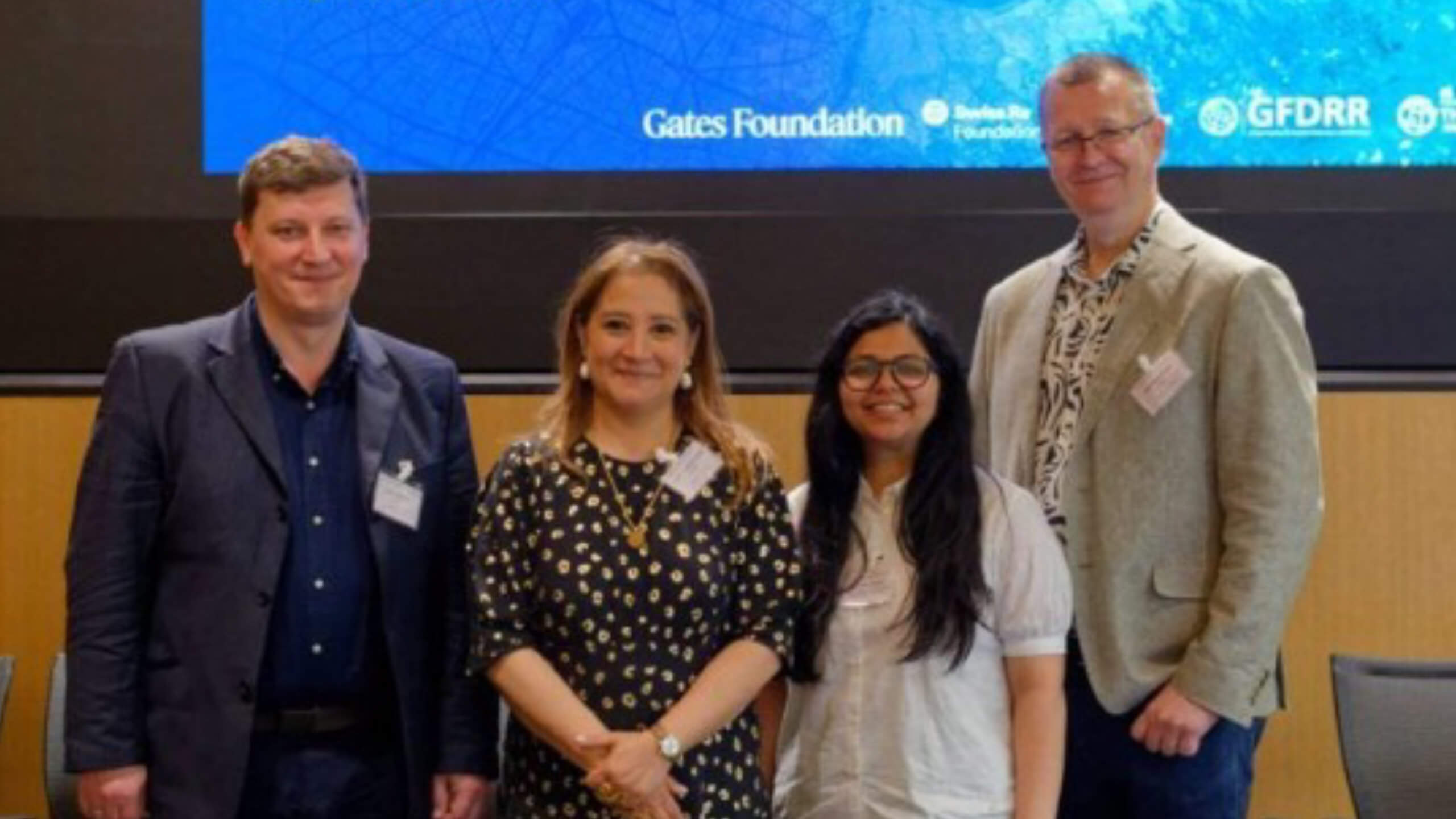
This was one of the key messages emerging from the recent Urban and Climate Risk Data Lab in Paris, where discussions highlighted how valuable datasets can remain scattered across different organisations, disciplines and platforms.
While these resources may individually provide valuable information, differences in standards, metadata practices and data structures can make it difficult to bring them together and use them across disciplinary and organisational boundaries.
From available data to interoperable data
Making data available is only part of the challenge. To address complex societal issues, including climate resilience and disaster risk reduction, data also needs to be understandable and reusable across different systems, organisations and research communities.
Without common approaches to standards, metadata and interoperability, connecting heterogeneous resources can remain complex and limit their wider reuse.
This is precisely one of the challenges that CDIF4EOSC seeks to address.
The project is advancing the implementation of the Cross-Domain Interoperability Framework (CDIF), providing a practical approach to help organisations improve the interoperability and reusability of their data and digital resources across domains.
Bridging disciplinary boundaries through CDIF
Building on FAIR principles – Findable, Accessible, Interoperable and Reusable – and existing standards, CDIF supports greater interoperability without seeking to introduce an entirely new set of standards.
Instead, the framework provides guidance for connecting and using existing approaches across disciplinary and organisational boundaries.
By facilitating connections between different data resources and communities, CDIF can contribute to the development of more connected data ecosystems, enabling information from different domains to be combined and reused more effectively.
This cross-domain perspective is particularly relevant to areas such as climate resilience and disaster risk reduction, where addressing complex challenges can require bringing together data and expertise from multiple disciplines and organisations.
Strengthening collaboration around data interoperability
We are delighted to see CDIF and CDIF4EOSC featured in discussions emerging from the Urban and Climate Risk Data Lab.
Engagement with organisations and communities facing concrete interoperability challenges is an important part of advancing the practical implementation and adoption of cross-domain approaches.
CDIF4EOSC therefore welcomes opportunities to engage with organisations working to strengthen data interoperability, FAIR implementation and cross-domain collaboration, for climate resilience, disaster risk reduction and beyond.